Winter walks help you chill


Better hurry, your time for a winter walk in the woods is coming to an end…

But Spring woods are nice too!

Better hurry, your time for a winter walk in the woods is coming to an end…
But Spring woods are nice too!
Jeff Tweedy, a songwriter and musician best known as the leader of the band Wilco , has written a ton of great songs. He’s also written a couple of books. His most recent is How To Write One Song.

If you aspire to be a songwriter, there’s plenty of useful info in the book. And if your goal is merely a single song, the same holds true. (Tweedy is wisely lowering the “barriers to entry” with his book’s title. Writing a single song seems much less daunting than becoming a songwriter.)
But even if you never want to put pen to paper and create a song, you’ll still find plenty of creative fodder in Tweedy’s breezy and engaging book.
It’s not really about songwriting, it’s about creativity, in all its forms. The songwriting angle is really just an interesting construct, a device to get us to embrace our inner creative kid and ignore the critics, both internal and external.


I love that advice. Seems like we’ve heard similar suggestions before, right? Ignore the haters. Do what you love. Do it out of love, not out of a search for approval or fame or fortune. Trust the process, don’t worry about the end result.
It seems so simple, yet it’s difficult to put in to practice. Because we’re scared to be vulnerable.
Here’s the money quote:
I’m convinced the dreams we have for ourselves go unattained from a lack of permission more than any deficit in talent or desire. And I’m going to stress that when I say “permission,” I mean the permission we withhold or give ourselves to pursue those dreams.
jEFF tWEEDY IN hOW TO wRITE oNE sONG
Check out Jeff’s book… then give yourself a little more permission. One song at a time.
Sweet dreams!
Peter Guber is a movie producer. He’s produced many memorable flicks such as Rain Man, Batman, The Color Purple, Midnight Express, Gorillas in the Mist, and Flashdance. He’s also produced some clunkers, but he’s got a nice batting average. All told, the films he’s produced have grossed over $3 billion worldwide and received 50 Academy Award nominations.
Oh, he also co-owns the Golden State Warriors, the Los Angeles Dodgers and the Los Angeles Football Club of the MLS.
By the way, he’s also a bestselling author. His most recent book is titled Tell to Win.
Peter was a guest recently on Rob Lowe’s podcast, Literally! and had a lot to say about the power of storytelling. Check out this excerpt.
I love that term, emotional transportation. (Clearly this blog is like a Yugo Taxi that’s running low on fuel, but still…)
“Resonant, memorable, actionable.” Yeah, that’s the ticket!
The full podcast episode is here. And Peter Guber’s article for the Harvard Business Review, The Four Truths of the Storyteller, is here.
Keep sharing your stories!
Amanda Gorman‘s entire poem “The Hill We Climb” was note-perfect at the Biden-Harris inauguration yesterday. But these lines really stood out to me:
We are striving to forge a union with purpose
To compose a country committed to all cultures, colors, characters and
conditions of man
And so we lift our gazes not to what stands between us
but what stands before us
We close the divide because we know, to put our future first,
we must first put our differences aside
We lay down our arms
so we can reach out our arms
to one another
We seek harm to none and harmony for all
Simply gorgeous… powerful… inspiring.
I hope we can live up to them.
At the risk of being the out-of-touch, crotchety “get off my lawn” guy, I think social media hasn’t been helpful in regard to our current cultural predicament (see Capitol, rioting).
My friend Phil sent me a link to this PBS Frontline documentary:
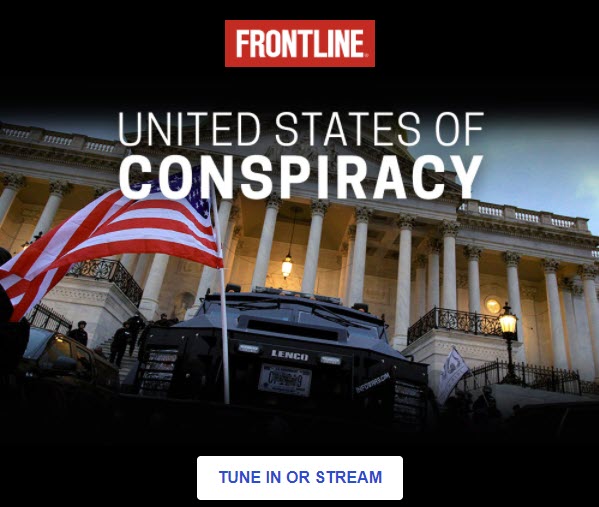
I watched the program a couple of nights ago. Pretty chilling.
What really stuck in my head was when one of the experts being interviewed said that in pre-social media times, a person who believed in a conspiracy theory was usually a “lone wolf” crackpot. But through the “magic” of the interwebs, they could now not only find like-addle-minded folks, but also amplify their beliefs in the social media echo chamber.
It’s like the old saying “A lie will gallop halfway round the world before the truth has time to pull its breeches on” – only now that lie isn’t galloping, it’s rocketing.

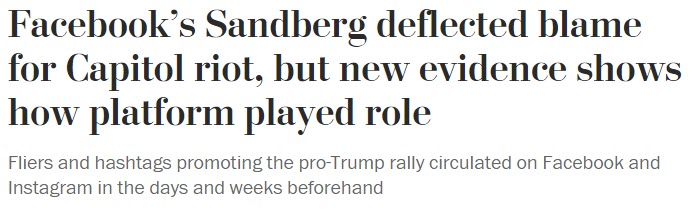
Did you notice, in the footage and photos of the Capitol coup attempt, how many of the rioters had their phones out, livestreaming their seditious acts or “doin’ it for the ‘gram”?
Seth Godin (yes, I know, I’m a fanboy) totally understands the rules of the game.

Seth’s entire post is here. Well worth a read. His wrap-up is something I hope the Zucks and Jacks of the world take heed of:

Amen, Brother Seth! It won’t solve all the problems that America has, but it’ll tone down the rhetoric and the lies that are designed to garner attention.
The pandemic has been a boon for my reading habits. I don’t watch a lot of TV — although I did plow through all four seasons of The Good Place and loved it — so I had plenty of spare time to curl up with a good book. Or eBook.
I like to zig when everyone else zags, so while I did get a eReader, it’s not a Kindle. (Take that Bezos! I’m sure losing my business might sink your whole operation.) I bought a Kobo. I said “Kobo” not Koko!

Not only was my Kobo Clara HD cheaper than a comparable Kindle, but it has two features I really love:
So I’m never short of free reading material. (Speaking of free, this is not a paid endorsement of Kobo readers… but I AM open to a bit of “influencer” cash… Kobo, ring me up!)
I also set up a Goodreads account recently, to start tracking the books I’ve read. Here’s my most recent half-dozen:

That’s a pretty good cross-section of my tastes, which definitely lean toward band biographies, “light” fiction/memoirs and humorous essays. I’m not a book snob by any means. Any book someone enjoys reading is a “good book” in my book.
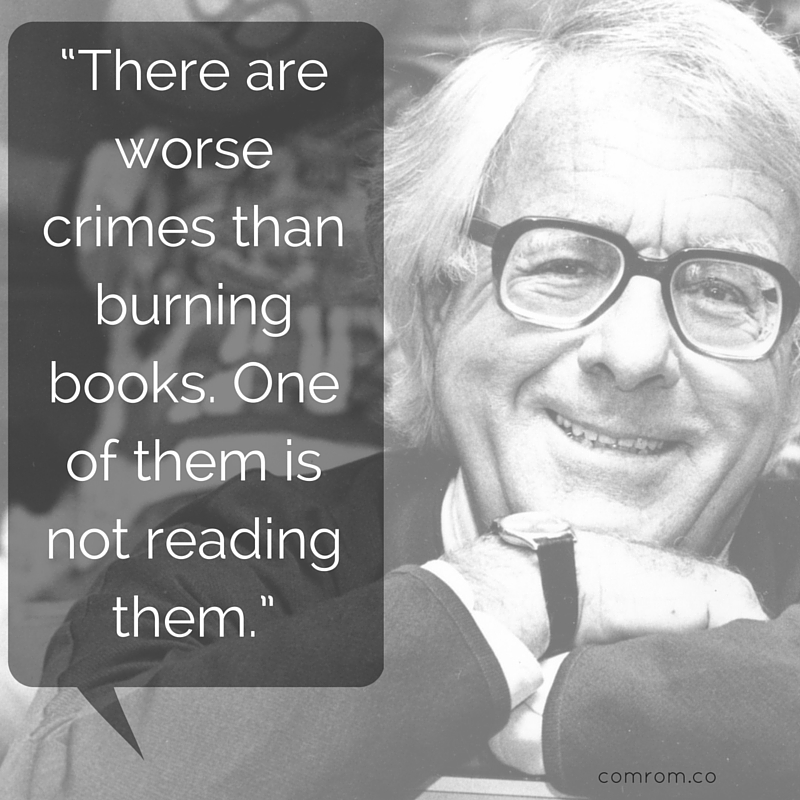
Tamara Shopsin’s book on the list above was good, but I thought her book Stupid, Arbitrary Goal was fantastic. David Rakoff’s essays are great. And better still, my friend Jay got a shout-out in the acknowledgements of Fraud (or maybe it was in Don’t Get Too Comfortable… I’ve been reading a lot of Rakoff.) Here’s what Jay said about him:
David was a great writer—really funny and poignant in equal measure. And just a wonderful guy. I edited him when I worked at Outside. It was very kind of him to give me a shout-out. I miss his voice and I miss him. He was taken from us much, much too soon.
I agree 100% with Jay’s “funny and poignant in equal measure” assessment. And yes, he left us way too soon.
Pandemic lockdown has been a real bummer in many ways, but it’s created more time for reading, and that’s certainly a plus.
You done said…