A few weeks ago, I posted a version of my email soliciting donations for Ride Cincinnati, a cycling event that raises funds for cancer research, education and care.
Here’s what I said back then:
And that’s never been more true.
More than 40 kind-hearted folks have supported my efforts. Family members. Friends from all walks of my life. College buddies. Radio pals. Ad agency colleagues. Former co-workers. Current co-workers. Friends of friends who have become friends. Neighbors. In-laws. Even a couple of outlaws (you know who you are!).
It all adds up. Thanks to their generosity, I’ve surpassed my fundraising goal.
That’s all well and good, but reaching my personal goal wasn’t the real goal. The goal is raising awareness of the great work that organizations like Cancer Care Advisors do. And yes, raising money to help the folks fighting cancer.
You’re giving money, yes. But you’re also giving hope. That’s priceless.
What goes around comes around… mile after mile.
Thanks!
(And if you haven’t donated yet and want to chip in to get me over $3,500, you can do so here.)
“Dubbatrubba, what’s your writing process?” — asked No One Ever.
Why, thanks so much for asking, Mr. or Ms. N.O. Ever!
Whatever weirdness oozes out of my brain usually starts as scribbles. Pen on paper. It looks like gibberish.
It IS gibberish. Or maybe shorthand. But after all the scribbles and scratch-outs and circles and arrows, I usually figure out what I really want to say. And turn to the typewriter to whip it into shape. (OK, it’s a computer – sorry to let you down, Tom Hanks.)
The example above was when I was brainstorming ideas for promotional audio clips (i.e. mini-commercials) to be played on Inhailer Radio. They’re playing old episodes of the “97X Rumblings from the Big Bush” podcast that my friend Dave and I have been doing for several years now. You can catch the new/old episodes Sunday nights at 9 p.m. Eastern.
The time slot is a radio dead zone – I know this from experience because back when I worked at the AM oldies/FM country radio stations (WDJO-AM and WUBE-FM respectively) the program director of the country FM station would let me do air shifts during the Sunday night slot. (With the on-air name of “Cincinnati Redd” so kindly bestowed upon me by the PD…) And there was only one possible explanation for his largesse:
But hey, this new/old medium required very little effort on our part. And perhaps it’ll introduce a few new listeners to our labor-of-love podcast, since Inhailer is a kindred spirit of 97X.
The scribbles above yielded two longer promos (you can listen to one below), two short promos, and three mid-episode “cut-ins” (“you’re listening to…). Not bad for a page of paper and some ink.
Your process may be different. (And it’s probably better.) But if you want to write, start scribbling.
Editor’s note: Below is a slightly modified version of an email I sent out yesterday afternoon. Posting here in case any of my loyal readers (all three of them) weren’t on the distro list for the email… or in case anyone else stumbles across this post and decides to donate.
Writing is usually my happy place, but this is one I absolutely hate writing.
I hate it because I am asking you to donate to my Ride Cincinnati efforts when gas and grocery prices are taking a much bigger bite out of your wallet. Granted, raising funds for cancer research, education and care is a noble cause. But that’s of little solace when there’s “too much month at the end of the money” as the old country song goes.
I hate it because the reason behind the email is cancer, and cancer is pure evil. It has taken away people I love, and people you love. And other friends and family members are battling it right now.
And I dread it because it’s yet another painful reminder that my friend “LJ” is no longer with us. He was diagnosed with brain cancer in May of 2024. He fought the good fight. No one was braver. No one had a better attitude. But still, we lost him in November of last year.
I hate writing this, but I know in my heart I’ll wind up loving the outcome.
Because of your generosity – even in tough times.
Because it helps. Every damn dollar makes a difference.
Through our partnership with the Cincinnati Cancer Foundation (CCF), Ride Cincinnati fundraising supports local hospitals, nonprofits and community programs that are making a difference in the lives of cancer patients and their families.
And because it reminds me that life is beautiful, even when it’s way too short.
24 days from now, I’ll have had as many spins around this globe as LJ got (Lord willin’).
38 days from now, I’m going to spin my bike wheels for 30 miles (knees willin’), to pay tribute to LJ, and keep his memory alive, and to help other folks who are bravely battling cancer with his same strength and grace. What goes around, comes around.
Give if you can. No worries if you can’t. I still love you, and appreciate you.
Thanks!
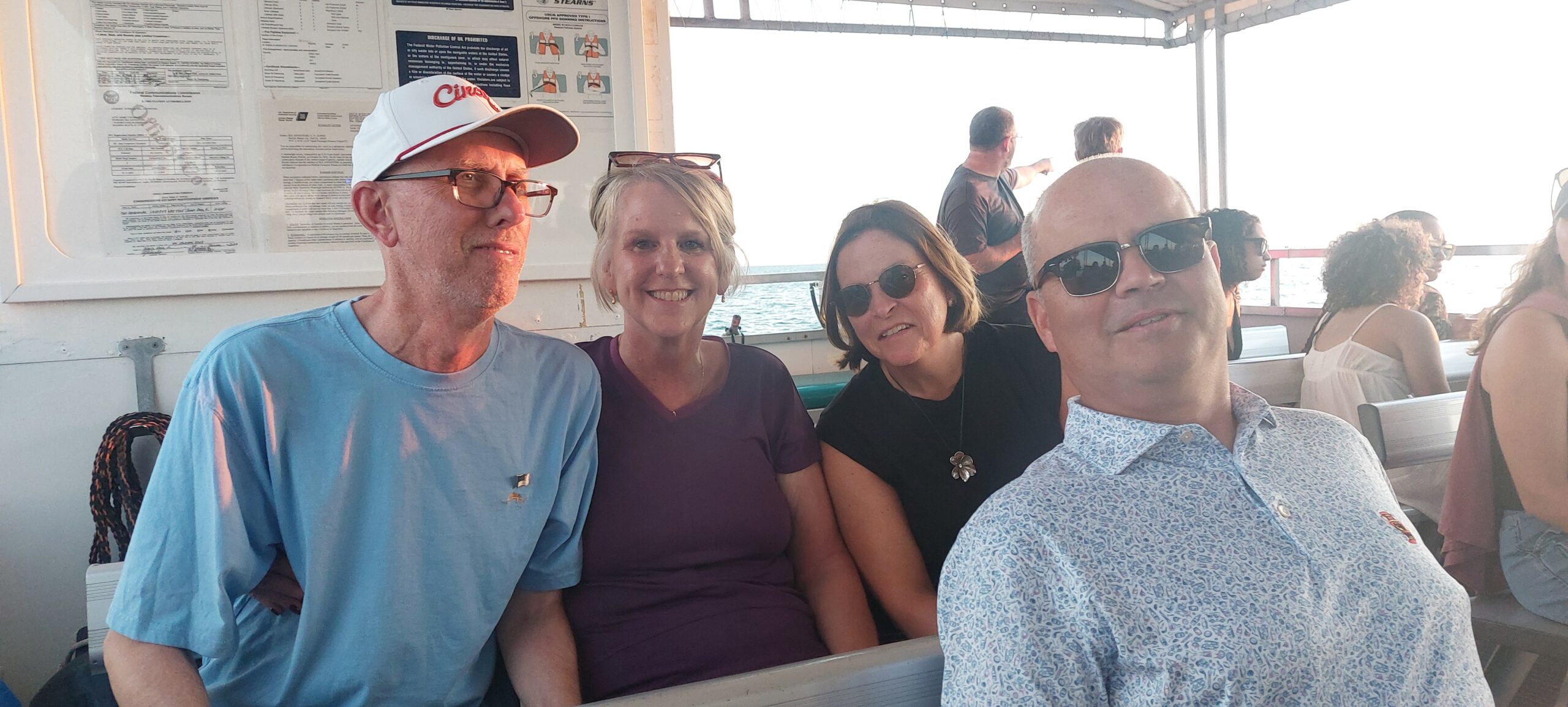
LJ on the left, with his wife Patty, and our friends Sheila and Art, on a sunset cruise in Florida last fall. We knew it would probably be LJ’s last trip to the beach, a place he loved very much.
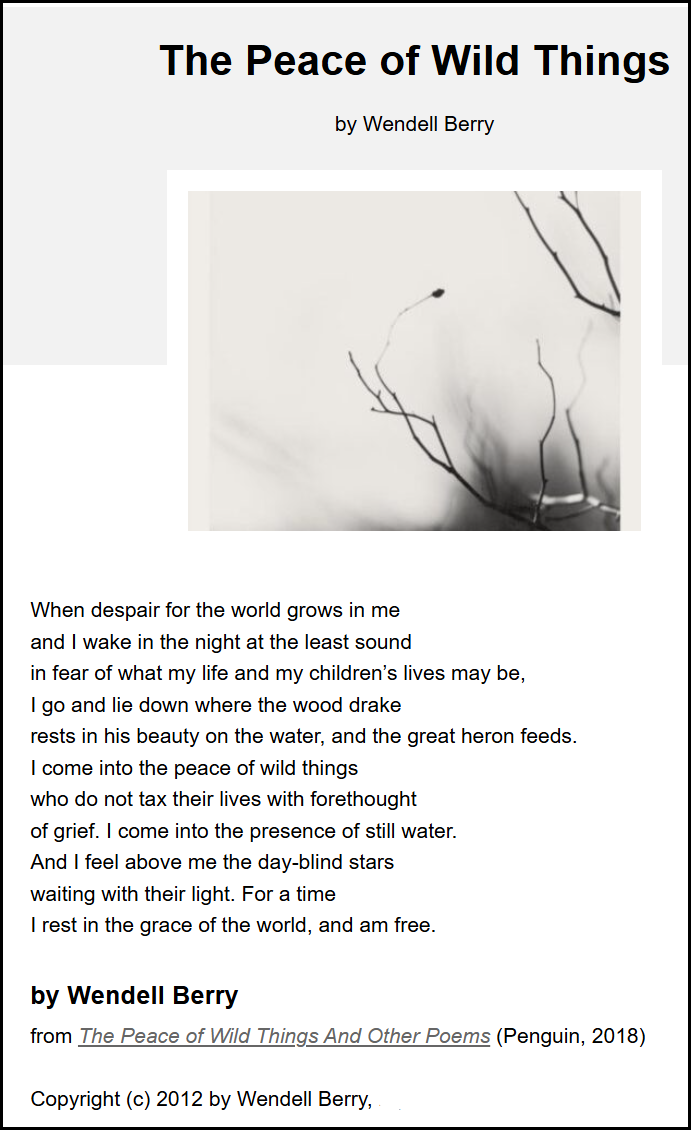
In The Shawshank Redemption, Andy Dufresne had some great advice for all of us:
“Get busy living or get busy dying.”
The actor who played Andy, Tim Robbins, also has some good advice for all of us in the latest episode of the Smartless podcast:
No matter what age you are, maybe you should take a page from Tim’s book and consider “retiring” from “the daily anxiety of opposing something” as Tim says.
“The idea that you can find your worth and purpose and virtue by hatred is a terrible, terrible idea… ”
Tim’s absolutely right. That hate isn’t helping. It’s dying from the inside out.
“If the first thing you’re doing is doomscrolling about something that will make you feel better about your political beliefs, you might try a little yoga or you might try a little exercise or take a bike ride.”
Yoga. Exercise. A bike ride. Put down the phone. Turn off the cable news. And get busy living!
Scott Galloway is a professor of Marketing at NYU’s Stern School of Business, the host of the Prof G and Pivot Podcasts and a best-selling author. His latest book is Notes on Being A Man.
He’s also published a newsletter nearly every Friday for the past 10 years. It’s called “No Mercy/No Malice.” (Or NM2 in Scott’s shorthand.) You can subscribe here.
It was originally a client engagement product for Scott’s company L2.
Before I sold L2, we’d launched a series of media products to create more engagement. Winners & Losers was a video series exploring innovation in the consumer sector, and NM2 was meant to be a newsletter exploring, well, whatever was on my mind that week.
When Scott sold that company, the buyer didn’t want the newsletter. It was orphaned… it turned out pretty well:
NM2 was too salty for Gartner (the acquiring company), and they said it could not be affiliated with the firm, but I could have the IP. A decade later, we have 430k subscribers, and the newsletter is the center of the flywheel for ProfG Media. The tone/aim of NM2 is simple: provide insight and be fearless.
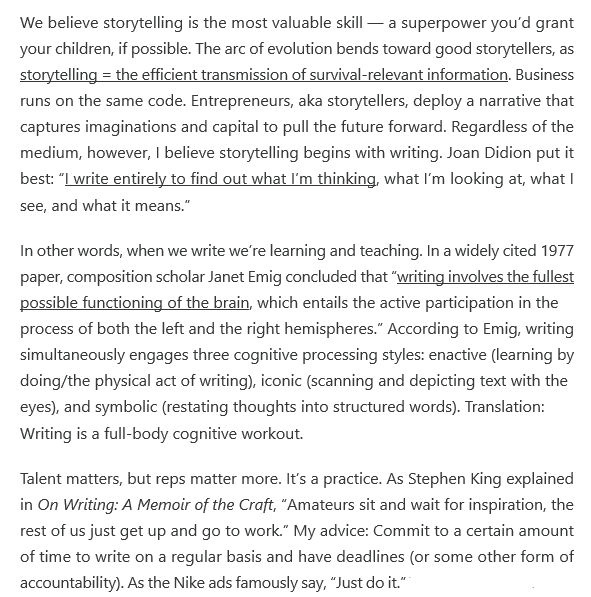
430k subscribers is quite impressive. But getting there took a lot of work. Pen to paper, week after week. I’m biased, but I love what Scott has to say about writing in his 10th anniversary post:
Writing is a full-body cognitive workout. And reps matter more than talent. Amen!
I may never get to 430K subscribers. Or even 43. But the process is good for my brain. And my heart.
Writing is becoming a lost art. You don’t have to be a pro to give it a go, though.
A good place to start is Julia Cameron’s “Morning Pages”:
You can learn more in Julia’s book The Artis’s Way. Or you can just do the morning pages.
Thomas G Kuhl on Get on the bus!: “I am glad that bus keeps circling………” Sep 8, 03:37
Kevin Sullivan on The full-brain workout: “Yep, keep writing .. in your voice. https://www.nytimes.com/2026/08/04/opinion/artificial-intelligence-ai-writing.html?unlocked_article_code=1.4VA.JFCf.Lr_UK5tlpBRR&smid=url-share” Aug 10, 10:57










Leave a Reply