I’ve done quite a bit of reading over the past 16 months (thanks pandemic!), but no book has moved me more than this one:
I’m late to the game. The book came out in 2019. Brian Doyle died of brain cancer in 2017, at the age of 60. But better late than never, right?
One Long River of Song is a collection of essays – some happy, some heartbreaking… and all with a spiritual sense of wonder about the world we inhabit.
“Brian Doyle lived the pleasure of bearing daily witness to the glories hidden in people, places and creatures of little or no size or renown, and brought inimitably playful or soaring or aching or heartfelt language to his tellings.”
David James Duncan in the introduction to One Long River of Song
Some books are enjoyable on a surface level but soon forgotten. This one soaks into your skin and burrows into your heart and soul. Simple gorgeous prose.
Austin Kleon’s weekly newsletter put this book on my radar. If you haven’t already read it, do so now and thank me (and Austin) later.
“The arts are not a way to make a living. They are a very human way of making life more bearable. Practicing an art, no matter how well or badly, is a way to make your soul grow, for heaven’s sake. Sing in the shower. Dance to the radio. Tell stories. Write a poem to a friend, even a lousy poem. Do it as well as you possible can. You will get an enormous reward. You will have created something.”
Kurt Vonnegut, in his book A Man Without a Country
Not that I need any more notoriety — this blog has thousandshundredstens a few loyal readers — but I managed to get a byline in the April edition of Cincinnati Magazine by writing the text to accompany some really cool photos (by Aaron M. Conway) of a local farm that grows hops.
The editor of Cincinnati Magazine, John Fox, is an old friend of mine. When I was working at an alternative music station, he was the editor of an alt-weekly, and the station and the paper would collaborate, cross-pollinate, and co-promote events often due to the large overlap in audiences. John will throw me a magazine assignment every now and then – usually something fairly straightforward and not too time-consuming. I enjoy the challenge, and I always wind up learning something new while doing research and interviews. For the hops farm piece, I got to interview one of the growers and connect with brewers at several local breweries… it’s a really tight-knit community and it was cool to witness the spirit of collaboration among them. I also learned quite a bit about the process of growing hops, and I found it quite fascinating.
“The more you know…”
If you’re keeping score at home, I’ve now done four pieces for Cincinnati Magazine over the past couple of years, and two of them have been beer-centric. I think I’m being typecast. Then again, if the shoe beer mug fits…
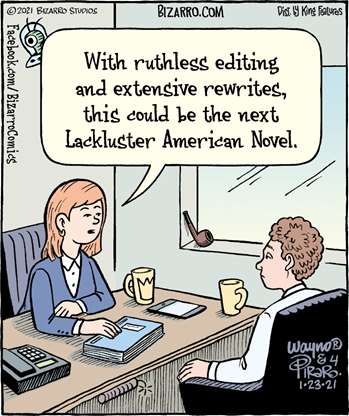
Heck, I’m too ADHD to even put together the basis for a lackluster novel. But I’m OK with that. Lackluster blog posts are right in my wheelhouse. And there’s something to be said for that. Putting pen to paper — or fingers to keyboard to the ether — is worthwhile to exercise those writing muscles. Even when the end result is lackluster.
The worldwide web (remember when we called it that?) is wonderful for helping us connect. It also can be infinitely overwhelming and a colossal waste of time. It’s all in how you use it. Don’t just be a looker, be a learner.
“You can’t expect somebody to become a biologist by giving them access to the Harvard University biology library and saying, “Just look through it.” That will give them nothing. The internet is the same, except magnified enormously.
The person who wins the Nobel Prize in biology is not the person who read the most journal articles and took the most notes on them. It’s the person who knew what to look for. Cultivating that capacity to seek what’s significant, always willing to question whether you’re on the right track, that’s what education is going to be about, whether it’s using computers and internet, or pencil and paper and books.”
It’s not just the ol’ interwebs we’re talking about. It’s what we read, what we watch, what we listen to. It’s easy to stuff your senses with “stuff”… but the key is knowing how to sift. You can find whatever you’re looking for… so what are you looking for? This concept doesn’t just apply to learning; it applies to life in general.
Artwork by Austin Kleon
The Noam Chomsky quote came my way via the James Clear 3-2-1 newsletter. The Amy Krouse Rosenthal tweet was highlighted in Austin Kleon’s weekly newsletter. Both are worth your attention. And if you have yet to read Amy Krouse Rosenthal‘s books Textbook Amy Krouse Rosenthal and Encyclopedia of an Ordinary Life, seek them out.
Douglas Adams, author of The Hitchhiker’s Guide to the Galaxy, had to psyche himself up about writing .
“Writing isn’t so bad really when you get through the worry. Forget about the worry, just press on. Don’t be embarrassed about the bad bits. Don’t strain at them… Writing can be good. You attack it, don’t let it attack you. You can get pleasure out of it. You can certainly do very well for yourself with it!”
Douglas Adams
It’s great advice for any writer. This blog may be 99% “bad bits” but still we press on.
The note above and other Douglas Adams archival content will be published in a forthcoming book called 42. Read more in this article from The Guardian.
Kevin Sullivan on War… why? And now what?: “I read your post Damian and I like it very much. As we move from a Saturday morning headline of…” Mar 3, 09:22
Damian on Smartphones are making us dumb.: “Thanks for (not) reading the post, Kevin. And thanks for mentioning several other formats (article, essay, poem) that can train…” Feb 23, 19:55
Kevin on Smartphones are making us dumb.: “You know I didn’t read your post because I don’t need to. The lack of reading of all generations reveals…” Feb 23, 10:32






You done said…