“Starting on day one, we will end inflation and make America affordable again, to bring down the prices of all goods.”
— Donald Trump, (NBC Montana, Trump Rally in Bozeman, MT, YouTube August 9, 2024).
“Energy is going to bring us back. That means we’re going down and getting gasoline below $2 a gallon, bring down the price of everything from electricity rates to groceries, airfares, and housing costs.”
— Donald Trump (NBC News, Trump Addresses Economic Club Of New York, YouTube September 5, 2024).
How’s that working out for us?
That’s just gas. What about groceries?
But things will get better soon, right?
So much for those “Day 1” promises.
Who is responsible for this mess?
Not Sleepy Joe. Not Critical Race Theory. Not Antifa. Not drag queens. Not immigrants. Not street gangs. Not communists. Not socialists. Not election officials. Not the “deep state.” Not the “fake news media.” Not the “radical left.” Not China. Not Canada.
Nope there’s one person that caused all this misery.
“If you’ve been injured in an auto accident, Emerson Jones can get you the money you deserve…”
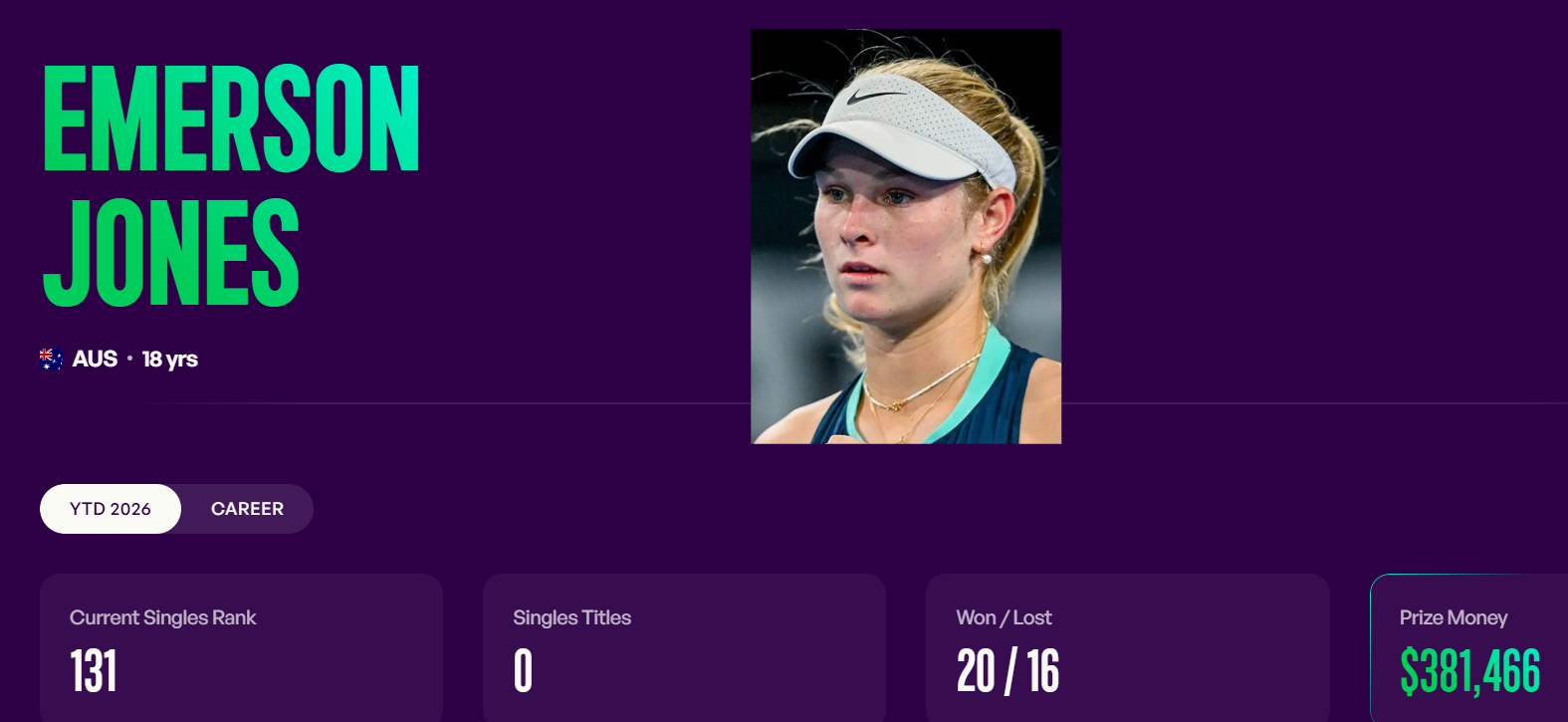
Emerson Jones is actually a Aussie tennis player. I watched some of her match in the qualifying rounds of the Cincinnati Open last Tuesday.
She’s one of the top 140 players in the WTA. And there she was, on a random Tuesday, in a random city, trying to beat a random opponent, on a random court at the Cincinnati Open complex. Not Center Court. Not the Grandstand Court. Not the Champions Court. Not the Tony Trabert Court. Just one of the many outlier courts, each with a few rows of seats.
At #131 in the rankings, she’s right on the cusp of the draw (128 players each, give or take, in both men’s and women’s).
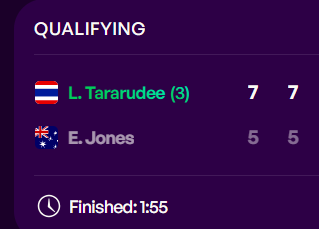
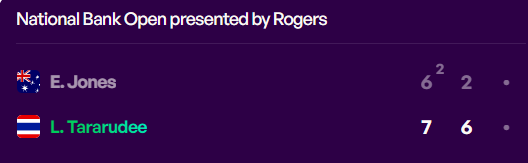
The match was close, but “Emmo” (as her coaches called her) lost in straight sets. 7-5, 7-5.
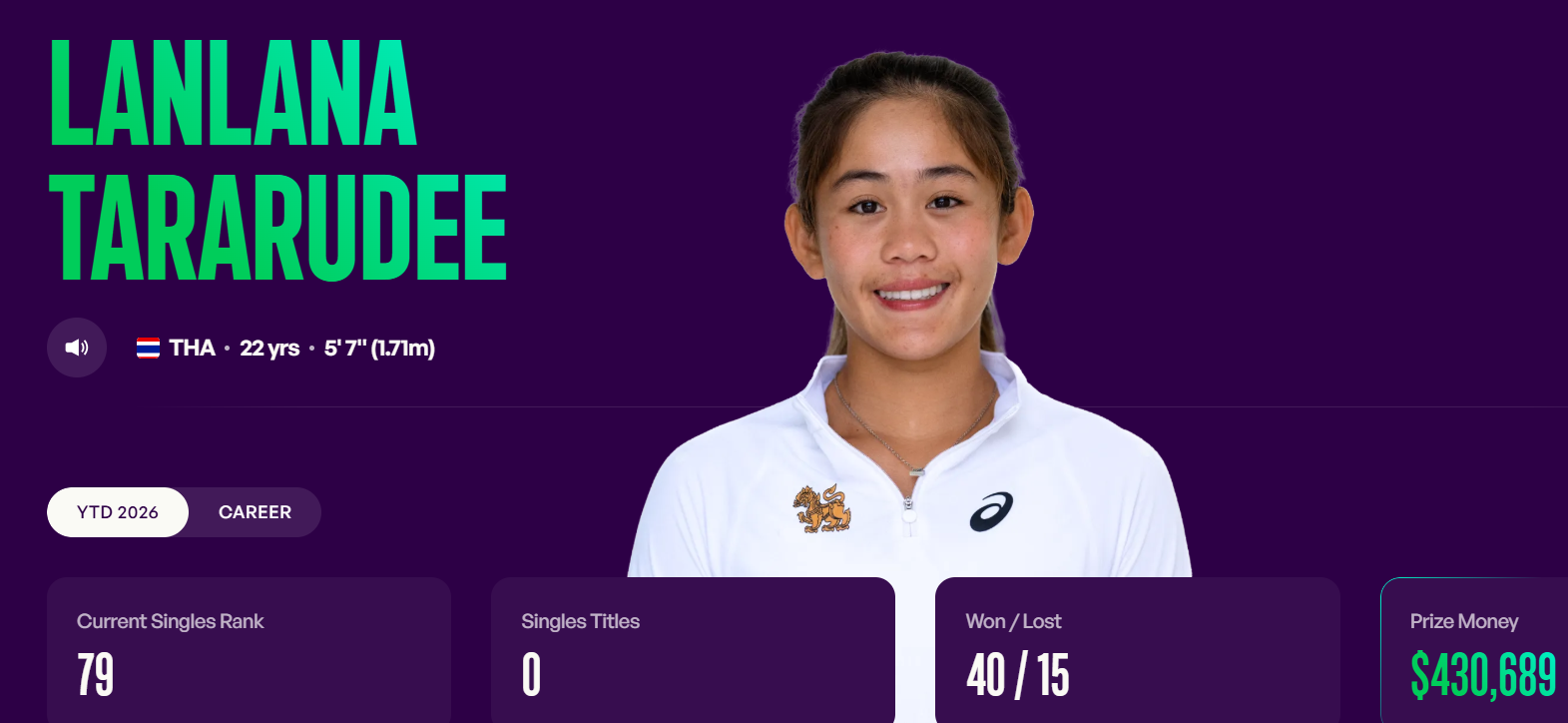
She lost to Lanlana Tararudee… great name! Lanlana is slightly higher on the WTA food chain, but still in the “qualifier” group.
FWIW, She’s the highest ranked player from Thailand, too.
As fate would have it, Emerson and Lanlana also had squared off in the previous tournament, in Canada.
Two kids, half a world away from home, trying to make it in a cutthroat sport.
If you look at the prize money totals for both players, you might be thinking that’s some pretty good coin for an 18-year-old and a 22-year-old. And it is. But there’s a price that comes with the prizes.
That prize money has to be split up among coaches, agents, trainers… all the cogs that feed the machine. And then there’s airfare, hotel rooms, meals, equipment…
Not to mention that there’s not much of an off-season for the sport, so you’re on the road constantly. Home is wherever you lay your head on the hotel pillow. And heaven forbid if you skip a tourney – it’ll drop you down in the all-important rankings.
If you want to “go pro” this is your life. Tennis seems like such a glamorous sport. And it is, at the top. But for every woman holding up the winner’s trophy, there are literally hundreds of others that are nearly as good, just trying to make a go of it, on a random court in a random city on a random weekday, trying to beat their opponent so they can do it all again the next day, and the next week.
It’s a lot more grind and grit, and a lot less glamour. Kudos to Emerson, and Lanlana, and all the other “also rans” who are still out there running.
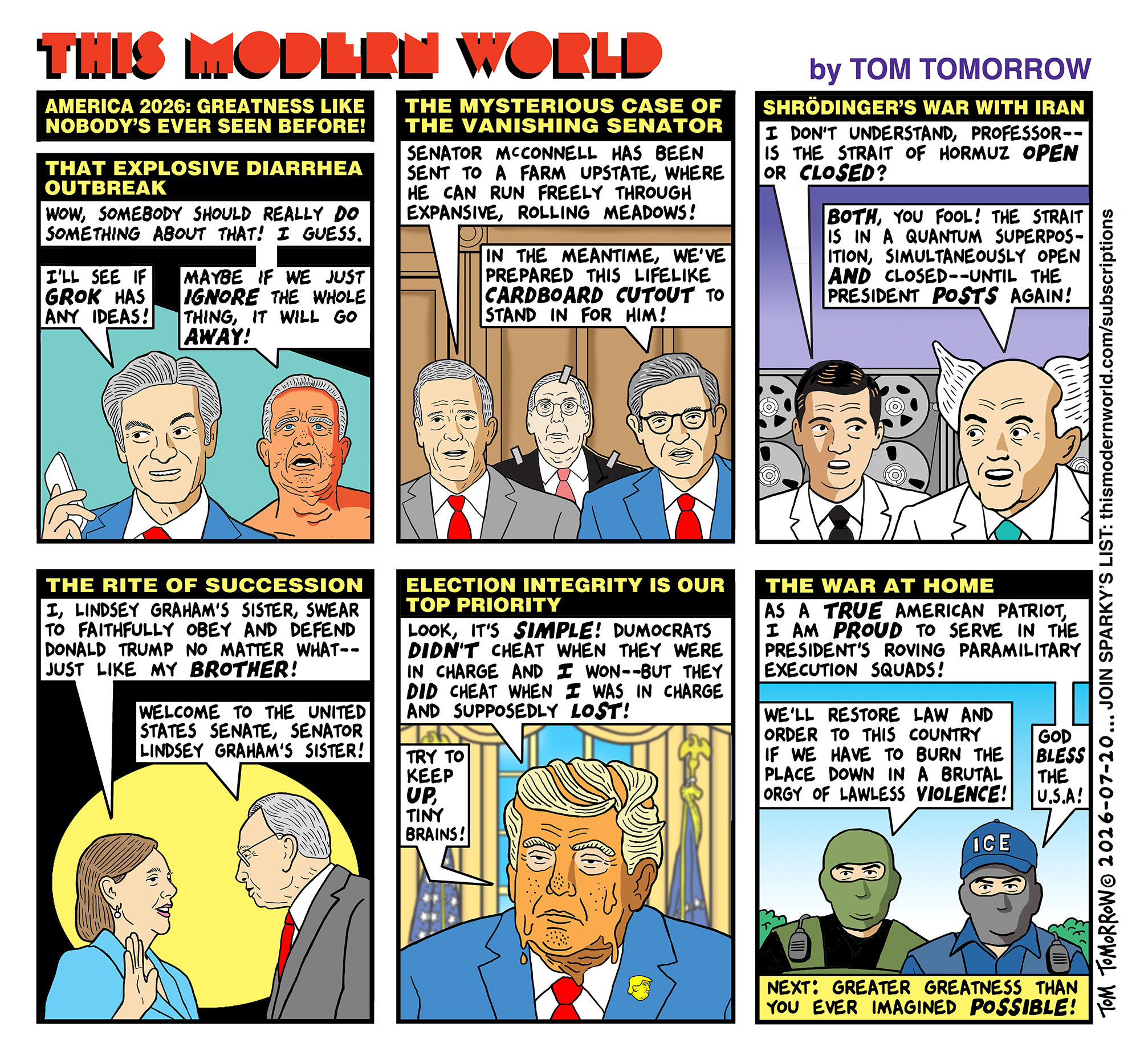
“Tom Tomorrow” is a darn funny political cartoonist. He puts out a weekly cartoon/comic strip called This Modern World.
It’s actually a single-panel cartoon, but it’s usually subdivided into 6 frames. It’s always amusing, and unfortunately these days, it seems less like satire and more like reality. Here’s his cartoon from last week:
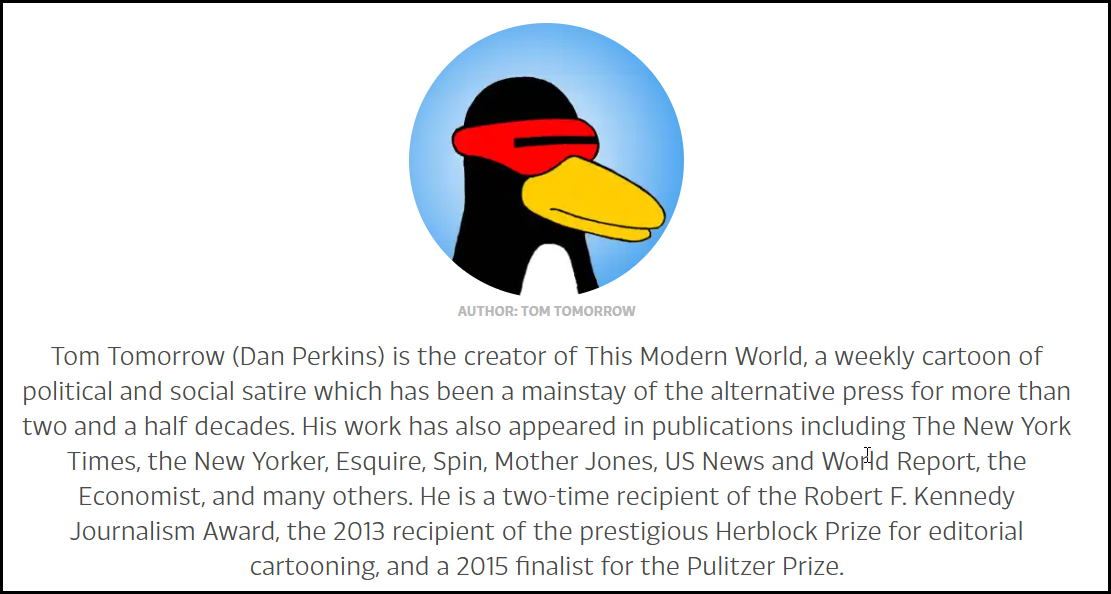
“Tom” (a.k.a. Dan Perkins) has some serious bona fides too:
“Tom Tomorrow’s sharp and iconic work embodies the higher purpose of political cartooning: holding powerful figures to account using satire grounded in good journalism,” the Berryman Award judges said.
(from the article linked above)
I used to read This Modern World in CityBeat, Cincinnati’s alt-weekly. But times are tough in the print biz, and Tom’s strip has been dropped by a lot of alt-weeklies due to budget constraints. You can check it out for free at Daily Kos, but a better way to reward his art is to subscribe to his weekly newsletter, “Sparky’s List,” which includes the weekly cartoon, some commentary on the artwork, and Dan’s personal observations.
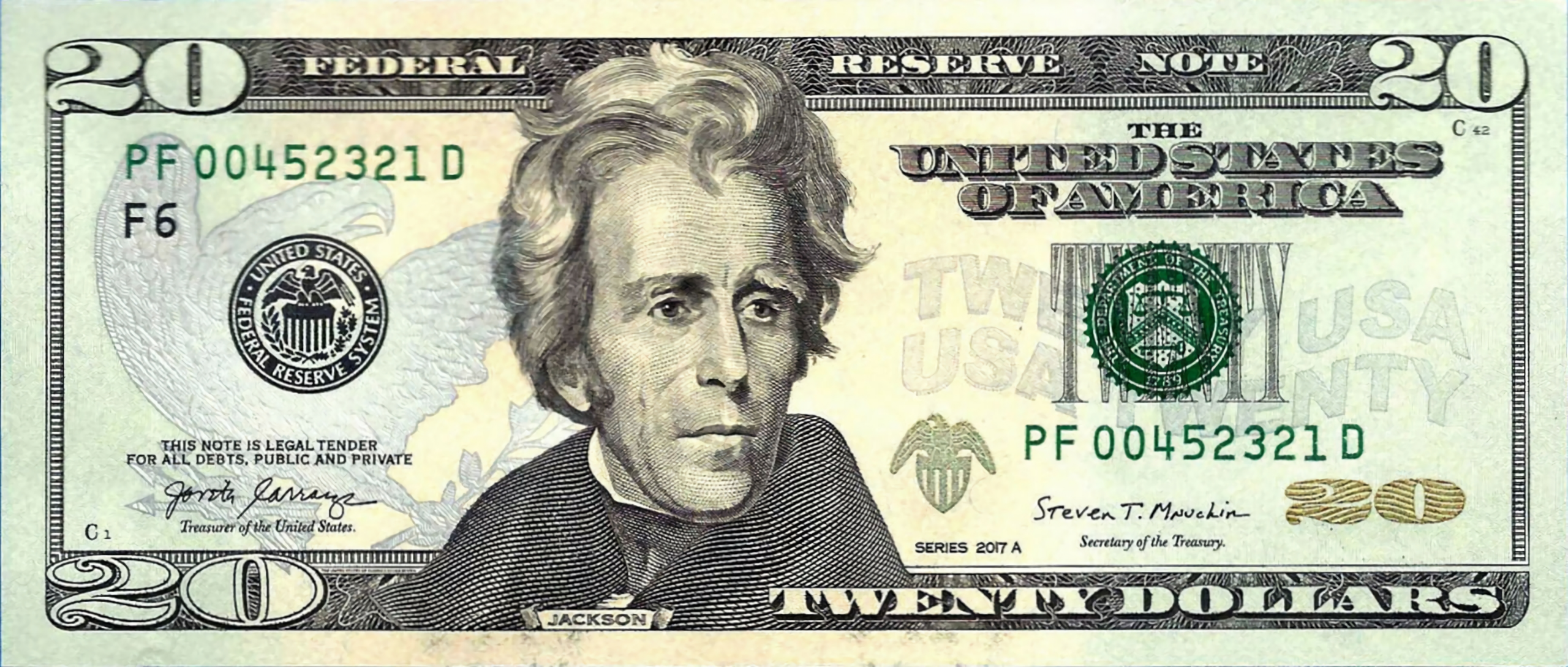
You can subscribe to “Sparky’s List” for as little as $20 a year.
A single Jackson a year for a weekly dose of humor from Tomorrow? Totally worth it in This Modern World!
Because I’m a person of advanced years, I DO think about Social Security a bit more than I did in my carefree younger days. But I quickly tire of any talk about Social Security insolvency. Not because it isn’t possible, but because the fix is so patently obvious.
It’s time to raise the roof!
Here’s why:
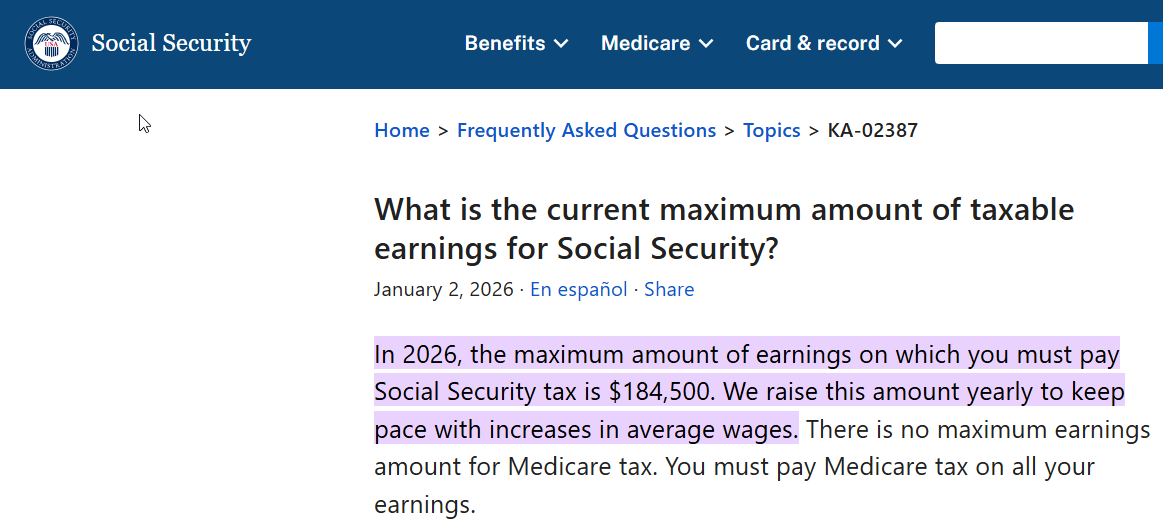
I know $184,500 is more than most Americans earn in a year. But there are plenty of people making a LOT more than that. (6% of covered workers, per the Social Security website.) And it seems unfair that once they’ve hit that mark, they don’t contribute another nickel… even though their SS payments will be higher than the Average Joe’s (and Average Jane’s) based on their lofty income.
And the $184,500 is based on “earned” income (wages, salary, tips, bonus…). So if you make a killing in the stock market, or pulling in thousands in dividends, that’s not even taken into consideration.
Raising the roof (i.e. the max or cap) would deliver a lot more money into the system, without creating a hardship on anyone. What should that roof be? 300K? 400k? Greater minds than mine can sort that out.
OR, maybe instead of raising the roof, we shouldn’t have a roof at all!
Nick Hanauer‘s proposal calls for that (eliminating the roof), and actually goes a couple of steps further, by lowering the contribution rate by 50% while also eliminating the capital gains and investment exemptions and loopholes. Check it out:
“Half of all national income is now above the cap.”
I’m not one of those “eat the rich” types. But I do think that Social Security could be much better for America if it were more social.
So Agent Orange waddled up to a podium last night and read from the teleprompter about how American elections were “worse than any Third World country.”
If you’re trying to keep score at home, here’s your cheat sheet (no pun intended):
Elections Donald J. Trump won*: fair, secure, no meddling… “perfect”
Election he lost: fraudulent, rigged, rife with cheating and voter fraud, “stolen”
Upcoming elections where the GOP is going to get crushed: “unsafe”
*meaning Electoral College votes – he lost the popular vote in 2016.
As is typically the case, every accusation is a confession. T-Rump urging the Senate to pass the SAVE America Act (a better name would be the Voter Intimidation and Disenfranchisement Act) is a good example:
“How easy is that to do? Unless you want to cheat. The only reason you wouldn’t do it is you want to cheat because your policies are so bad and your candidates are so pathetic that you can’t get elected any other way.”
Bad policies, pathetic candidate, wanting to cheat… yep, that sounds just like the guy who has spent every day of his presidency ignoring laws and screwing over the working class and poor to line his own pockets. And the guy who welcomed Russian interference in the 2016 election.
Donny can delude himself about election fraud all he wants… even most of his minions aren’t buying it. But this is about sowing the seeds of doubt and distrust now, in advance of the mid-terms. He knows they’ll be a referendum on his policies. And he knows that what his feckless Speaker of the House, Mike Johnson said back in February is actually true:
“If we lost the midterms — heaven forbid — if we lost the majority in the House, it would be the end of the Trump presidency in real effect.”
From Holy Mike’s lips to God’s ears. Because the biggest fraud was (and IS) the guy behind the microphone making accusations last night.
No one would be trying to take your vote away from you with this level of intensity if they didn’t understand how important your vote is, how powerful it makes you. Trump always says the quiet part out loud. He’s doing that now. Your vote matters. Prepare to do whatever it takes this fall to cast it. Let’s put a stop to the lies once and for all. — Joyce Vance on her Substack
Kevin Sullivan on 43-3=1,001: “Reading while listening to Keith Jarrett, “Guess I’ll Hang Out My Tears To Dry”, good good stuff Damian, thanks.” Oct 3, 09:29
Thomas Kuhl on We did it!: “Well done! Good and Honorable man!” Sep 29, 01:29
Thomas G Kuhl on Get on the bus!: “I am glad that bus keeps circling………” Sep 8, 03:37
Kevin Sullivan on The full-brain workout: “Yep, keep writing .. in your voice. https://www.nytimes.com/2026/08/04/opinion/artificial-intelligence-ai-writing.html?unlocked_article_code=1.4VA.JFCf.Lr_UK5tlpBRR&smid=url-share” Aug 10, 10:57






You done said…